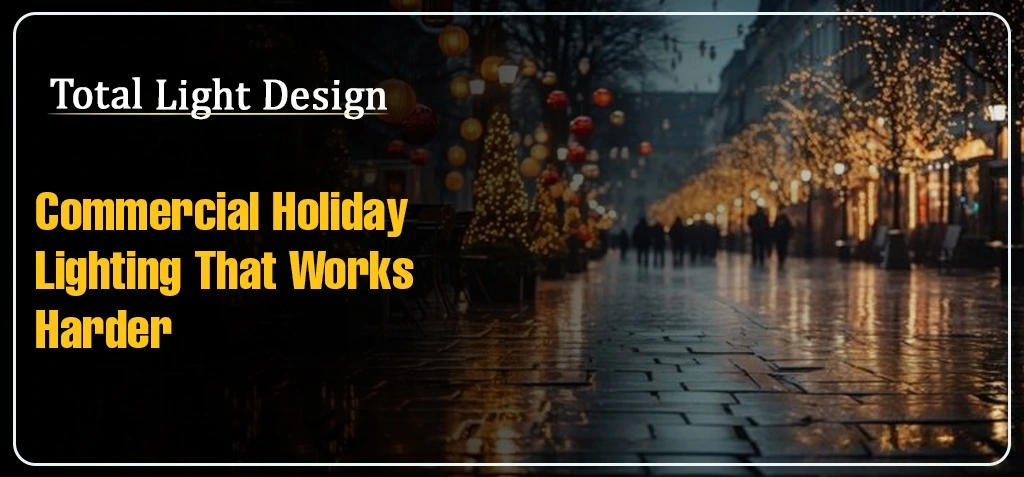
Picture two shops on the same street in December. Both spent money on lights. One looks tired and patchy. The other glows, draws phones out of pockets, and fills the sidewalk with people.
Same season. Same budget range. Very different results.
The gap is not luck. It comes from planning, smart design, and a clear goal. Done well, commercial holiday lighting is not decoration. It is a hard-working marketing asset that runs every night for weeks.
In this guide, you will learn what makes a display perform. You will also see how to plan it, what to avoid, and how to measure the payoff.
Why Most Business Displays Fall Flat
Many businesses treat lights as a last-minute task. Someone buys a few strands, climbs a ladder, and hopes for the best. The result often looks random.
Here are the usual problems:
- No clear focal point. Lights are spread evenly, so nothing stands out.
- Poor scale. Small strands on a large building vanish from the street.
- Mismatched colors. The display clashes with the brand or the building.
- Early failures. Cheap bulbs burn out by mid-December.
- Bad timing. Lights go up after the shopping rush has already started.
Each of these wastes money. Worse, a weak display can quietly send the wrong message about your business.
What "Working Harder" Really Means
A display that works harder does more than look pretty. It supports your business goals.
Think of it as a night-shift employee. It never takes a break. It greets people, builds mood, and builds trust, all after you close.
A strong display can:
- Pull in foot traffic and drive-by attention
- Make your entrance easy to find after dark
- Create photo moments that customers share online
- Signal that your business is open, cared for, and welcoming
- Set the holiday mood that encourages people to linger
That last point matters. People who feel good tend to stay longer. Longer visits often mean bigger baskets.
Five Ways a Smart Display Earns Its Keep
1. It Gives Your Building a Stronger Identity
Your roofline, windows, and entrance already tell a story. Good lighting follows those lines and makes them pop.
Clean outlines create a polished look. Soft wraps on trees or columns add depth. A bold feature at the entrance draws the eye straight to your door.
The goal is balance. Too little looks sparse. Too much looks messy.
2. It Boosts Safety and Wayfinding
Holiday evenings get dark early. Walkways, steps, and parking areas need clear light.
A well-planned layout adds warmth while also guiding people safely to your entrance. That helps customers feel comfortable, and it lowers the risk of slips and trips.
3. It Creates Shareable Moments
Today, a great display can market itself. Customers love a glowing arch, a lit tree, or a bright wall they can pose in front of.
Every photo they post is free exposure. Give people a spot that begs to be photographed, and your reach grows without extra ad spend.
4. It Supports Your Brand
Your lights should feel like you. A modern office may suit crisp white and cool tones. A cozy cafe may prefer warm gold with touches of red.
Matching your brand colors keeps the look consistent. It also makes your business easier to remember.
5. It Lasts Through the Whole Season
A display that fails halfway through December hurts your image. Quality materials, secure mounting, and proper power planning keep everything shining until the final night.
Plan It Like a Project, Not a Decoration
The best results come from starting early. Here is a simple timeline you can follow.
Late summer to early fall: Set your goal and budget.
Decide what you want the display to do. Do you want more foot traffic? Better photos? A warmer welcome? A clear goal guides every choice that follows.
Early fall: Book a site visit.
A professional can measure your property, check power access, and spot problem areas. This step prevents costly surprises.
Mid fall: Approve the design.
Review the layout, colors, and placement. Ask to see a plan before anything is purchased or installed.
Before the shopping rush: Install.
Aim to have everything lit before the holiday rush begins. Early lighting means a longer return on your investment.
Through the season: Maintain.
Wind, weather, and wildlife can cause damage. A maintenance plan keeps the display looking fresh.
After the holidays: Remove and store.
Take everything down on schedule. Proper storage protects your lights for next year.
If you wait until November to start, you may find the best install dates are gone. Early planning is the simplest way to get a better result.
Great Design Starts With a Plan
Strong holiday lighting design is about more than where the lights go. It is about how the whole picture feels from the street.
Here are the key principles:
- Start with the architecture. Highlight rooflines, windows, and doorways first.
- Pick one hero feature. A large tree, a grand entrance, or a bold wreath gives people a place to look.
- Limit your palette. Two or three colors look sharper than six.
- Layer your light. Mix outlines, wraps, and accents for depth.
- View it from the road. Walk or drive past at night to see what customers see.
Also think about the type of space you run. A restaurant, hotel, office, and shopping center all need different approaches. A retail space, for example, benefits from holiday lighting for retail stores that pulls the eye toward windows and doors. A hotel might focus on a grand arrival moment. An office park may need a clean, welcoming look that works across many buildings.
Choose Materials That Last
Cheap lights are tempting. They often cost more in the long run.
Commercial-grade products handle cold, rain, snow, and wind. They also stay bright for the whole season.
Modern LED holiday lights are the smart choice for most businesses. Here is why:
- They use far less energy than older bulbs
- They run cooler, which is safer
- They last much longer
- They offer crisp, vivid color
Power planning matters too. Overloaded circuits can trip breakers and leave your display dark. A pro will balance the load and use weather-rated connections.
Know What Drives the Cost
Every property is different, so prices vary. These factors have the biggest impact:
- Size of the property. More surface area needs more lighting.
- Height and access. Tall buildings may need special equipment.
- Design complexity. Custom features cost more than simple outlines.
- Materials. Higher-grade products cost more up front but last longer.
- Service level. Full service usually covers design, installation, repairs, removal, and storage.
Do not judge a quote by price alone. Look at what is included. A lower price that skips maintenance and removal can end up costing more.
Mistakes to Avoid
Learn from the errors other businesses make:
- Starting too late. You lose weeks of impact.
- Skipping the site check. Hidden power or access issues cause delays.
- Ignoring local rules. Some areas have limits on brightness, timing, or signage.
- Over-decorating. More is not always better.
- Forgetting upkeep. One dark section can ruin the whole look.
- Doing risky work yourself. Ladders, heights, and electricity are real hazards.
That last one is worth repeating. Professional holiday light installation protects your team, your property, and your insurance. It also saves hours of effort.
How to Measure the Results
You cannot improve what you do not track. Try a few simple checks:
- Compare foot traffic to the same weeks last year
- Count customer comments about the lights
- Track social posts and tags that show your display
- Ask new customers how they found you
- Note any rise in evening sales
Even small notes help. Over a season or two, you will see what works and what to change.
Why Work With Total Light Design
A great display needs more than a ladder and a few strands. It needs design skill, quality products, and reliable service.
Total Light Design helps businesses turn lighting into a real advantage. The team looks at your building, your goals, and your brand. Then it builds a plan that fits.
You get a display that looks sharp, stays bright, and is handled from start to finish. That means less stress for you and more focus on running your business.
Ready to make this season count? Reach out to Total Light Design and start planning today.
Final Thoughts
Your building already has a stage. The holiday season gives you the spotlight. With the right plan, your lights can pull in customers, build trust, and make your business the one people remember.
Plan early. Design with purpose. Choose quality. Keep it maintained.
When you are ready to light up your property, connect with Total Light Design and get a display that works as hard as you do.