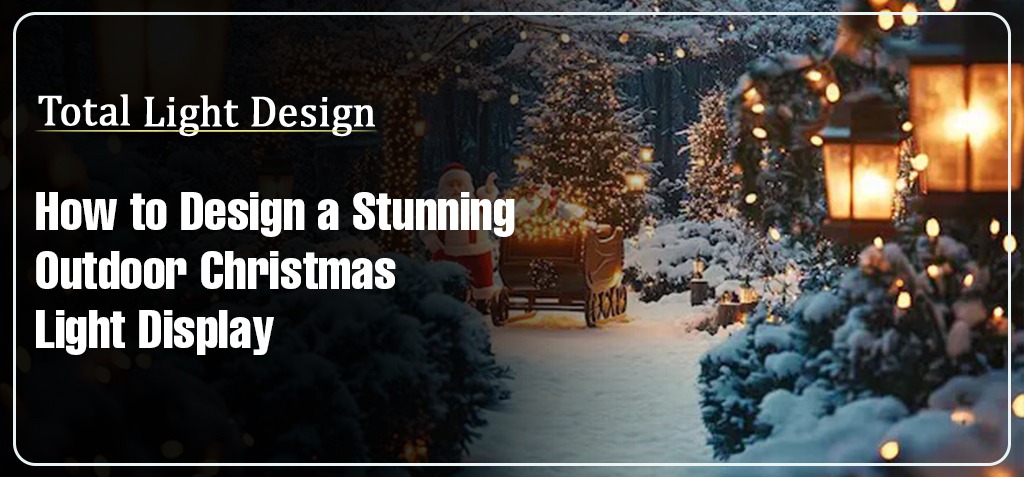
It's a cold December evening. A family drives slowly down your street. The kids press their faces against the frosted car window. Your home — glowing, layered, perfectly designed — stops them cold.
That's not luck. That's the intention.
A stunning outdoor Christmas light display doesn't happen by chance. It's the result of smart planning, the right light choices, and design principles that most homeowners never think about. Whether you're a first-timer or someone who's been hanging the same strand of warm whites for ten years, this guide will change how you think about outdoor holiday lighting — forever.
Why Your Outdoor Christmas Display Deserves More Thought
Most people treat Christmas lighting as an afterthought. They buy whatever's on sale at the hardware store, throw a few strands along the roofline, plug it in, and call it a day.
The result? Flat. Forgettable.
Here's what the most admired holiday displays have in common: layers, intention, and coherence. They treat the home's exterior like a stage — using light strategically to guide the eye, create depth, and tell a story.
The good news? You don't need a massive budget to do this. You need a plan.
Start With a Lighting Audit of Your Property
Before buying a single bulb, walk around your home at dusk and look at it with fresh eyes. Ask yourself:
- What are the natural focal points? (Front door, roofline, large trees, driveway entrance)
- Where does darkness "swallow" the exterior?
- What architectural details — columns, arches, window frames — are begging to be highlighted?
- Where are your outdoor power outlets located?
Tip: Take photos from the street. This is the angle your neighbors and passersby will see. Design for that perspective first.
Sketch a rough map of your property. Mark where lights will go, where power sources are, and how long each run needs to be. This one step saves hours of frustration during installation.
Choose Your Design Style Before Buying Anything
The biggest mistake homeowners make is buying lights without a design style in mind. This leads to a mismatched display that feels chaotic rather than curated.
Here are the four most popular outdoor Christmas lighting styles to consider:
Classic & Traditional
Warm white lights, symmetrical arrangements, and greenery accents. Think timeless elegance — the kind of display that photographs beautifully and never looks dated. Use C7 or C9 bulb strands along rooflines, white mini lights wrapped around porch columns, and pre-lit wreaths with red bows.
Modern Winter Wonderland
Cool white or icy blue LED lights, clean architectural lines, and minimalist decoration. This style works beautifully on contemporary homes with flat rooflines and clean facades. Less is more — precision matters more than volume.
Colorful & Playful
Multi-color LED strands, inflatable figures, animated projectors, and bold pathway lighting. This style is festive, family-friendly, and guaranteed to become the neighborhood's favorite house. It works best when there's a unifying color palette (not just every color thrown together).
Rustic & Natural
Warm amber Edison-style lights, wooden lanterns, pine cone accents, and natural greenery. This style feels warm, cozy, and organic — especially beautiful on craftsman-style or farmhouse homes.
Choose one. Commit to it. Every purchase decision should filter through your chosen style.
Layer Your Lighting for Maximum Visual Impact
This is the secret most blogs don't tell you.
A flat display — lights only along the roofline — looks two-dimensional. A layered display creates depth, drama, and visual interest from every angle.
Think of your display in three distinct layers:
Layer 1 — High (Roofline, Peaks, Chimney)
This is your "crown." Roofline lighting defines the shape of your home and is visible from the greatest distance. Use C9 LED bulbs on a commercial-grade stringer for a clean, professional look.
Layer 2 — Mid (Trees, Shrubs, Windows, Doors, Columns)
This is your "body." Wrap deciduous trees and evergreen shrubs with mini LED light strands. Frame windows and doors with warm white rope light or net lights. Add garland to porch railings and columns.
Layer 3 — Low (Pathways, Stakes, Ground Features)
This is your "foundation." Pathway lights, candy cane stakes, uplighting on trees, or illuminated gift boxes in the yard bring the display down to ground level and create a complete, immersive scene.
When all three layers are working together, your home stops looking "decorated" and starts looking designed.
Choose the Right Lights
If you're still using incandescent Christmas lights, it's time to make the switch.
Why LED lights are the only choice:
- They use up to 75% less energy than traditional incandescent bulbs
- They last 25x longer — often 25,000+ hours of use
- They run cooler, reducing fire risk around flammable garland and dry greenery
- They're brighter and more vivid, especially in cold weather
- Most are rated for outdoor use and can withstand rain, snow, and freezing temperatures
Types of LED lights and where to use them:
- Mini LED string lights — Trees, shrubs, window frames, garland
- C7/C9 LED bulbs on stringers — Rooflines, ridge lines, peaks
- Net lights — Even, quick coverage for dense shrubs and low hedges
- Rope lights — Outlining architectural features, steps, and railings
- Icicle lights — Eaves and overhangs for a dripping, wintry effect
- Fairy lights — Close-up decorative features, wreaths, and lanterns
- Smart/programmable LED lights — Color-changing and music-synced displays
Color temperature matters more than most people realize. Warm white (2700K–3000K) feels cozy and classic. Cool white (5000K–6500K) feels crisp and modern. Choose based on your design style — and be consistent across your display.
Plan Your Power Strategy
Nothing kills holiday excitement like a tripped breaker at 6 PM on Christmas Eve.
Before you install anything, calculate your power load. Most residential circuits handle 15–20 amps. LEDs draw far less power than incandescents, but large displays still add up.
Smart power planning tips:
- Identify all available outdoor GFCI outlets (these are required for outdoor use)
- Spread your display across multiple circuits if possible
- Use heavy-duty, weatherproof outdoor extension cords rated for the load
- Never daisy-chain more extension cords than the manufacturer allows
- Install outdoor timers so lights automatically turn on at dusk and off at midnight — this saves energy and extends bulb life
- Consider a smart plug with scheduling for added convenience
A note on outdoor safety: Always use lights and extension cords rated for outdoor use. Look for the UL (Underwriters Laboratories) listing on the packaging. Never use indoor lights outside, even temporarily.
Installation Tips for a Professional-Looking Result
Even beautiful lights look amateur when installed sloppily. Here's how the pros do it:
On rooflines and gutters:
- Use plastic gutter clips or shingle tabs — never staple guns or nails
- Space C7/C9 bulbs evenly (12 inches apart is standard)
- Run wires along the roofline rather than over it for a cleaner look
- Always work on a dry, calm day — never in rain, ice, or wind
On trees:
- Start from the trunk and work outward toward the branch tips
- Use approximately 100 mini lights per vertical foot of tree height
- Wrap branches in a spiral pattern for full, even coverage
- For large canopy trees, use net lights thrown over the top for speed and even distribution
On shrubs and hedges:
- Net lights are your best friend — they drape evenly without hours of fiddling
- For taller or shaped shrubs, wrap from the base upward with mini lights
On windows and doors:
- Use adhesive outdoor light clips — they hold well and leave no marks
- Frame windows with a single strand for elegance, or double-strand for drama
- Add lit garland above doorways to create an inviting entrance arch
General rules:
- Secure all wires so they don't blow loose in wind
- Hide extension cords along fence lines, walls, or under mulch
- Test every strand before you install it — fix or replace non-working lights before they're hanging 20 feet up
Add Focal Points and Wow Factors
Every great display has at least one element that makes people stop and stare. Here are ideas to take your display from good to unforgettable:
Music-Synced Light Show
Programmable LED controllers let you synchronize your display to Christmas music broadcast on a low-power FM transmitter. Drivers slow down. Kids beg to come back.
Projection Lighting
High-quality holiday projectors cast snowflakes, stars, or festive animations across your home's facade. They're easy to set up and create instant visual drama with minimal installation effort.
Animated Wire Figures
Illuminated deer, snowmen, and sleighs add whimsy and movement to yard displays. Choose wire figures with built-in LED strands for durability and a polished look.
Lighted Pathway Trees
Tall, slender lighted trees or spiral light trees flanking your driveway entrance create a grand, welcoming effect.
Giant Lighted Gift Boxes
Weatherproof boxes wrapped in outdoor lights and ribbon, stacked in groupings, create a festive yard scene that's unique and eye-catching.
Think About Takedown Before You Hang Anything
The best displays are also easy to remove — because nobody wants to be the house with Easter still lit up from Christmas.
Smart takedown planning:
- Label each section (north roofline, front left tree, etc.) as you install it
- Use reusable zip ties and velcro straps instead of single-use tape
- Invest in a cord reel or wrap lights around cardboard pieces to prevent tangling
- Store lights in airtight bins with silica gel packets to prevent moisture damage
- Take photos of your display before removal — your blueprint for next year
When to Call a Professional: Knowing Your Limits
Some displays are genuinely DIY-friendly. Others require ladders at dangerous heights, complex electrical work, or commercial-grade equipment that's worth leaving to the experts.
If your home has a steep roofline, multiple stories, or you're envisioning a large-scale synchronized display, professional installation is a wise investment — not just for results, but for safety.
For homeowners in the Pacific Northwest, Total Light Design offers premium christmas lights installation that handles everything from design consultation to post-season removal. Whether you need christmas lights installation portland, christmas lights installation washington, or christmas lights installation vancouver, their team brings professional-grade results with zero stress on your end.
Your Home Deserves This Moment
The holidays come once a year. Your home's exterior is a canvas — and Christmas lights are one of the few times you get to paint it with pure joy.
Plan with intention. Layer with purpose. Choose quality over quantity.
When you step back and see your finished display glowing against the winter sky, you'll know it was worth every minute.
Ready to create a display that stops traffic this season? Start with your design plan today — or reach out to a professional lighting team in your area to bring the vision to life.